As someone who has grown up in Wales, learned the Welsh language to fluency and currently lives and works in Wales bilingually, I understand how important a date the National Eisteddfod is in our in the calendar. It is one of the largest cultural gatherings in Europe, bringing thousands of people together to celebrate Welsh culture, language, community and the arts.
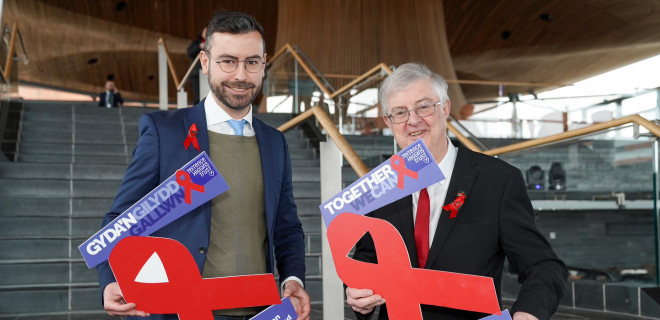
This year, for the first time ever, HIV took centre stage. For me, seeing HIV spotlighted at such an important cultural event felt like a hopeful step forward: a chance to replace silence with openness, uncertainty with understanding, and shame with pride in how far Wales has come.
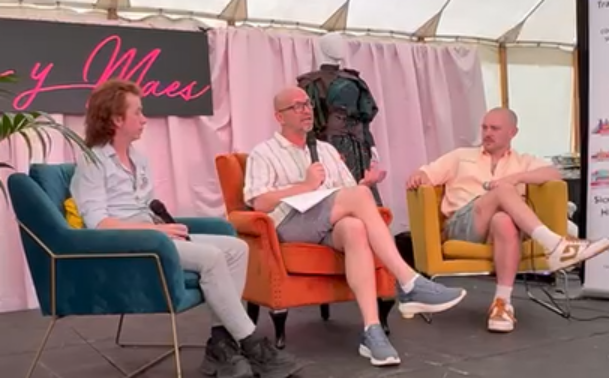
The history of HIV in Wales, the impact that stigma still has on people living with the virus, and the opportunity that Wales has to end new cases of HIV by 2030 were all important topics of conversation. It felt like a landmark moment for me to share that people living with HIV who are on effective treatment can live long, healthy lives and cannot pass HIV on sexually.
That knowledge gives us so much reason for hope, even while we continue to challenge outdated ideas and stigma. It opened up space to talk honestly about testing, treatment, peer support and what it means not just to live with HIV, but to live well and thrive in Wales.
In my work as an Online Peer Support Coordinator, I see how important it is that people living with HIV can access support wherever they are. In Wales, that matters deeply. Not everyone lives near a clinic, a support group or a major town, and for people in the most rural communities, distance, transport and privacy can all make it harder to reach out. Online peer support helps bridge that gap. It means someone living with HIV in even the most rural part of Wales can still connect with someone who understands, ask questions, feel less isolated and get support in a way that works for them.
By making lived experience of HIV in Wales and information visible at a major Welsh cultural event, the day helped challenge myths, encourage people to seek support, and show that the future of HIV in Wales can be one of openness, care and community.
I was also proud to be part of remembering proud Welshman, and our charity’s namesake, Terry Higgins. The memorial was full of celebration, with music from the South Wales Gay Men’s Chorus, belly dancing from Rahim El Habachi and voguing from Alia 077. A huge thanks also goes to Mirain Iwerydd for presenting the event and helping make the day so memorable.
For me, this year’s Eisteddfod carried a bright and powerful message: that HIV belongs in our public conversations, that stigma can be overcome, and that people living with HIV deserve to be seen, supported and celebrated as part of the rich and hopeful story of modern Wales.