The external condom is worn over an erect penis (or sex toy), while the internal condom is a pouch with two rings inside it inserted into the vagina before sex.
How effective are condoms?
How effective are condoms at preventing sexually transmitted infections (STIs)?
When used correctly each time you have sex, condoms are the best protection against STIs and HIV when having vaginal/frontal, anal or oral sex.
The important thing is to use condoms correctly and consistently. You should still get tested for STIs regularly, and speak to your doctor if you think you might have an STI.
How effective are condoms at preventing pregnancy?
If, over one year, condoms were used properly and consistently with their partners, 98% of pregnancies would be avoided.
Internal condoms have a slightly lower level of effectiveness – 95% if used correctly.
While other contraceptives such as the pill protect against unplanned pregnancies, they offer no protection against STIs, unlike condoms.
Using a condom with other methods of contraception offers extra protection against both pregnancy and infections.
What are the benefits of condoms?
Compared to other products that protect against pregnancy and STIs, condoms are:
- cheap (or free from sexual health clinics)
- easy to find
- only used during sex
- free of side effects
- easily used by anyone and without the help of a health worker.
How do I ask a partner to use a condom?
You may have condoms but find it difficult to use them (or to ask someone else to use them).
It can be tricky introducing a condom into the situation, which is why it’s always better to bring the subject up long before sex starts. A partner may be relieved that you’ve mentioned it.
What type of condoms are there?
There are two types of condom: external and internal.
The external condom is worn over the erect penis or sex toy, while the internal condom is a pouch with two rings inside it inserted into the vagina before sex.
A condom should carry one or both of the symbols below, a sign that it has passed certain tests and is of a decent quality:

External condoms
What size condom should I use?
Penises come in different sizes, so one size of condom will not fit all.
A condom that is too small can be uncomfortable and more likely to burst; too big and it’s more likely to come off during sex.
Sizes are stated on the packet:
- smaller condoms are marketed as ‘snug’, 'trim' or ‘close fit'
- larger ones are often described as ‘XL’.
Different condom brands might have different sizes. There may be a size guide on the packet or on the website that you can use to decide what size condom works for you. If you are measuring your penis to find the right fit, you should do this when it is fully erect.
When using a condom, it is important that it feels comfortable, and not too tight or too baggy. You might want to try different sizes or brands to find one that fits you best.
What is spermicide?
Spermicide is a chemical that kills sperm. Some condoms come covered with a spermicide. You can check the packaging to see if a spermicide has been used.
Avoid condoms with nonoxynol-9, which is a spermicide that often irritates the skin.
As spermicides in general might irritate the skin and increase the chance of infections, condoms without them are recommended if you have a choice.
Should I use novelty condoms?
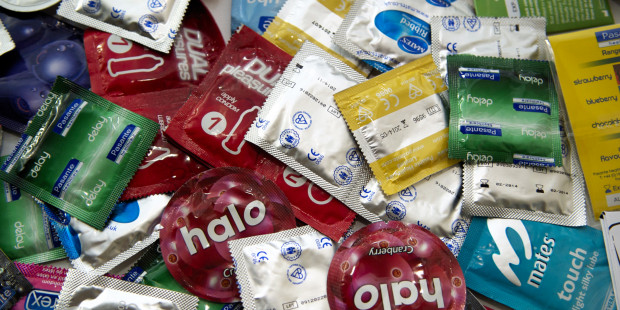
Condoms can come in different flavours (a good idea if you want to use them for oral sex) or with ribbed or shaped surfaces to increase sensation; even ‘glow in the dark’ condoms are available.
Check the packaging of any novelty condom in case it’s not recommended for sexual use – only use condoms with either the European or British Kitemarks shown above.
Do condoms expire?
Condoms do expire. They are usually good to use for five years, but this depends on how they are stored. Keep them away from damp and heat (e.g. radiators, lamps, direct sunlight) and don’t carry them around in your trouser pocket for a long time.
There will be a ‘use by’ date on the wrapper so always check before using. You shouldn’t use a condom past its ‘use by’ date, as it may be more likely to split.
Internal condoms
How do I choose an internal condom?
Internal condoms only come in one size, so you don’t need to worry about finding the right fit.
They might be made of rubber, soft plastic, or latex. If you have a latex allergy, check the material before you use an internal condom to make sure it’s suitable for you.
You can use extra lubricant on the inside and outside of the condom. If you are using a latex-based condom, do not use an oil-based lubricant.
Can I use internal and external condoms together?
You shouldn’t use internal and external condoms at the same time. This makes one or both of them more likely to split, which can increase the risk of unplanned pregnancy and STIs.
Problems with condoms
Some people find condoms tricky to use. Sometimes things go wrong. Here's some help with most common problems.
Putting condoms on
Some find that rolling a condom over their erection is uncomfortable. First, check that you are using the right size condom. If it feels uncomfortable, you may need a larger or wider size.
If using a larger and wider size condom doesn't help, one solution might be unrolling the condom a little first, then putting it over the erect penis the same way you would put a sock over a foot, being careful not to get air trapped under the condom or tear it.
Loss of sensation
If you’re worried about loss of sensation, opt for a very thin or light condom.
The thinner the condom, the better the sensation; the right size is also important.
Some condoms are available with ribbed, raised and shaped surfaces designed to increase sensation to both partners.
An advantage of internal condoms is that they don’t reduce sensation in the penis in the way external condoms can do.
Keeping the erection
If putting on a condom interferes with your erection, try gripping the base of your penis before you put it on – this traps the blood, helping to keep your penis hard.
A cock ring has the same effect but it lasts longer. Asking a partner to put the condom on can also help.
A larger brand of condom (such as Trojan Magnum, Pleasure Plus or Durex Comfort XL) might also be less restrictive to your erection. Larger brands should still stay on as the ring at the base is not any larger than other types of condom.
Internal condoms may also be a solution if you find external condoms restrictive.
Latex allergy
For people allergic to latex (it makes their skin red or itchy), both external and internal condoms are available that are made from non-latex materials.
These materials also don’t have a latex smell.
Condoms and interruptions
Having to stop during sex to look for a condom can be a passion killer.
Have them in places where they’ll be easy to get hold of. Keeping condoms in your wallet, handbag or by the bedside shows you’re taking responsibility for yourself and your sexual partner.
It’s a good idea to have condoms to hand but if you have had them for a while remember to check the ‘use by’ date and replace them if you need to.
What to do when condoms break?
If you're having rougher or longer sex it could be that a condom might split. This could put you or your partner at risk of unplanned pregnancy, HIV or another STI.
You could take emergency contraception to reduce the risk of pregnancy or post-exposure prophylaxis (PEP) to reduce the risk of HIV transmission – but you need to act fast.
There seems to be no difference in breakage rates between thicker and thinner condoms, but some people prefer to use thicker condoms for extra protection, especially for anal sex.
Where can I get condoms discreetly?
You can get free contraception including condoms from sexual health clinics, as well as some pharmacies and GP surgeries. This is confidential, even if you are under 16. Your healthcare professional will not tell anybody that you need contraception, unless they think that you or somebody else is in danger.
There are also online services available that will send you condoms in the post in discreet packaging.